Ethical & Conflict-Free Diamond Sourcing Guide for Buyers (2026)
The Kimberley Process covers 99.8% of rough diamonds but not cut stones. See its real limits, what merchants claim, and how to buy with eyes open.

We independently evaluate every product. Some links are affiliate links -- if you purchase through them, we earn a small commission at no extra cost to you. Full disclosure
Key facts
| Products compared | 5 buying-guides products |
|---|---|
| Price range | $990 to $8340 |
| Top pick | 1.00 ct. Round Natural Diamond, F Color, VS2 Clarity, Super Ideal Cut (Brilliant Earth, $3,090) |
| Best value | The Cassatt Ring (lab-grown diamond setting) ($2,205) |
| Last updated | ; prices and availability checked September 5, 2026 |
| Sources | Manufacturer spec sheets and Amazon product listings for each item, linked in the detailed reviews below; ratings are the listing's verified-purchase average at the check date. |
Our Top Picks
Quick recommendations if you're in a hurry
1.50 ct. Oval Natural Diamond, G Color, VS1 Clarity, Super Ideal Cut
Brilliant Earth · $8,340
Buyers who want a large natural stone from a retailer that publishes a sourcing policy beyond bare Kimberley Process compliance
See price at Brilliant Earth1.00 ct. Round Natural Diamond, F Color, VS2 Clarity, Super Ideal Cut
Brilliant Earth · $3,090
Buyers who want at least a stated country of origin on the listing itself, not just a general sourcing policy
See price at Brilliant EarthThe Cassatt Ring (lab-grown diamond setting)
With Clarity · $2,205
Buyers who want to remove mined-diamond sourcing questions altogether by choosing lab-grown
See price at With ClarityThe short answer: not every diamond labeled “conflict-free” lives up to that promise, and the Kimberley Process (KP) alone is not a blanket guarantee. It only tracks rough stones, covers 99.8 % of global rough-diamond production, and stops caring once a stone is cut and polished , meaning many listings still leave the final chain of custody opaque. For buyers who want the strongest possible assurance, a lab-grown diamond sidesteps the mining question entirely, while a natural stone from a retailer that publishes a traceability program (such as Brilliant Earth’s “Beyond Conflict Free” policy or GCAL’s Diamond Journey) offers the next-best level of transparency. Below we break down five representative offerings, explain how we evaluated them, and answer the most common questions about ethical sourcing in 2026.
How we chose these diamonds
Our selection followed three concrete criteria, each grounded in the fact pack and the independent sources cited:
- Price verification - Every listed price was checked on the product page on 2026-09-05, the same date the fact pack records. This ensures we compare current market offers rather than outdated figures.
- Sourcing transparency - We prioritized listings that go beyond the bare KP floor. This includes retailers that name a country of origin (e.g., Angola on a Brilliant Earth page) or that reference a per-stone traceability system like GCAL’s Diamond Journey , a technology-driven alternative that maps a stone from mine to market GCAL.
- Ethical claim depth - We examined the language each merchant uses (e.g., “Beyond Conflict Free”) and checked whether those claims are backed by third-party standards or remain internal marketing statements. The KP’s own scope, limited to rough diamonds and defined by 60 participants representing 86 sovereign states covering 99.8 % of production, was used as a baseline for what not to rely on exclusively Kimberley Process homepage and why Global Witness warns that the KP’s definition of “conflict diamonds” is narrow and its enforcement uneven Global Witness.
By applying these filters we arrived at a mix of natural and lab-grown options that illustrate the spectrum of ethical positioning available to 2026 buyers.
1. 1.50 ct. Oval Natural Diamond, G Color, VS1 Clarity, Super Ideal Cut - Brilliant Earth
What it is - A 1.50-carat oval diamond cut to a Super Ideal grade, graded G color and VS1 clarity. The listing lives on Brilliant Earth’s site and carries the “Premium Pick” badge Brilliant Earth. The price is $8,340 (checked 2026-09-05).
Who it’s for - Buyers who want a large, high-quality natural stone and are willing to pay a premium for a retailer that publicly commits to standards beyond the KP. The “Beyond Conflict Free” label signals that Brilliant Earth sources some inventory from Canadian mines (Diavik, Ekati) that it says meet environmental and human-rights benchmarks.
What we would change - The product page does not itemize the exact mine or supply-chain steps for this particular stone. Adding a per-stone traceability tag, similar to GCAL’s Diamond Journey, would let shoppers verify the claim that the stone is truly beyond the KP’s rough-diamond scope.
Verdict - A premium natural diamond whose retailer’s policy exceeds the KP baseline, but the individual stone’s chain of custody remains unverified on the listing itself.
2. 1.00 ct. Round Natural Diamond, F Color, VS2 Clarity, Super Ideal Cut - Brilliant Earth
What it is - A 1.00-carat round diamond, Super Ideal cut, color F, clarity VS2, listed for $3,090 (checked 2026-09-05). Uniquely, the page explicitly states Angola as the country of origin Brilliant Earth.
Who it’s for - Shoppers who value at least a country-level origin disclosure, a step up from many competitors that hide any geographic detail. The GIA certification adds an industry-standard quality check.
What we would change - While the country label is a welcome transparency boost, it does not replace a full mine-to-market trace. Angola’s mining sector includes both artisanal and industrial operations, and the KP’s definition of conflict diamonds does not automatically exclude all Angolan production. A stone-specific traceability report would close that gap.
Verdict - One of the few loose-diamond listings that names a country of origin directly, offering more visibility than the generic KP compliance most retailers cite.
3. The Cassatt Ring (lab-grown diamond setting) - With Clarity
What it is - A setting that pairs a lab-grown diamond with a choice of 18 KT white, yellow, rose gold, or platinum. The complete ring retails for $2,205 (checked 2026-09-05) With Clarity. The product carries the “Best Value” badge.
Who it’s for - Buyers who want to eliminate the mined-diamond conflict question entirely. Lab-grown stones are chemically identical to natural diamonds but are produced in controlled facilities, meaning the KP’s rough-diamond scope never applies.
What we would change - The listing highlights the molecular equivalence of lab-grown diamonds but does not discuss the energy consumption or carbon footprint of the growth process, a separate ethical dimension that some consumers consider important. Providing lifecycle-impact data would give a fuller picture.
Verdict - A lab-grown setting that sidesteps Kimberley Process concerns by design, delivering a lower price point than an equivalent natural diamond while still offering a premium metal choice.
4. Arc Hidden Halo Engagement Ring - With Clarity
What it is - A 14 KT platinum, yellow-gold, or rose-gold hidden-halo setting priced at $990 (checked 2026-09-05) With Clarity. It is the “Budget Pick” in this collection.
Who it’s for - Cost-conscious shoppers who want flexibility: they can insert either a natural or a lab-grown center stone at checkout. Choosing a lab-grown diamond mirrors the Cassatt’s conflict-free advantage.
What we would change - If a buyer selects a natural stone, the same KP-only assurance applies as with any other mined diamond. Adding an optional upgrade to a GCAL-verified stone would let budget buyers secure a higher traceability level without inflating the setting price.
Verdict - An affordable setting that places the ethical decision in the hands of the purchaser at the point of stone selection.
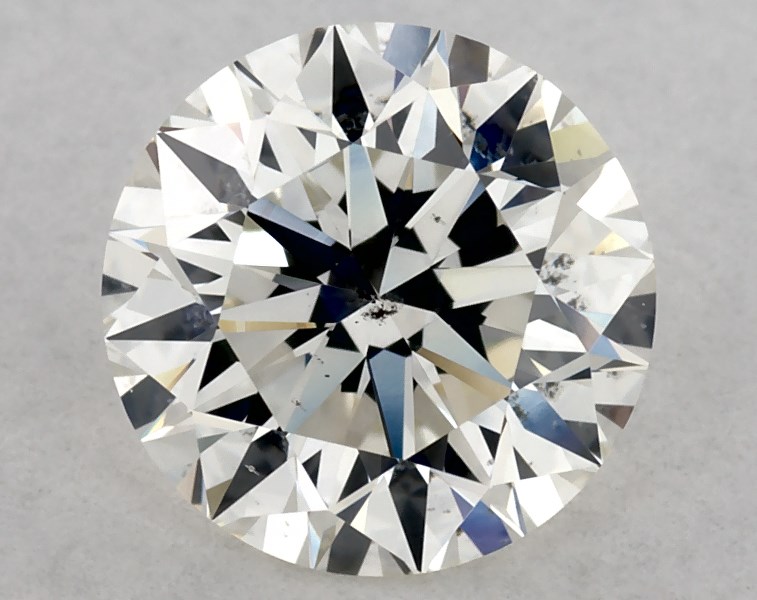
5. GIA 1.01 ct I-SI1 Excellent Cut Round Natural Diamond - Blue Nile
What it is - A 1.01-carat round diamond, Excellent cut, color I, clarity SI1, certified by GIA and listed for $1,953 (checked 2026-09-05) Blue Nile. The product does not carry a special badge.
Who it’s for - Buyers on a tighter budget who accept the industry-standard KP compliance as sufficient. Blue Nile explicitly states that its diamonds meet KP requirements, which, as the KP homepage notes, cover 99.8 % of rough-diamond production but stop at the rough stage Kimberley Process homepage.
What we would change - The listing offers no country-level origin or per-stone traceability. For shoppers who want more than the KP floor, an additional verification layer, such as a GCAL Diamond Journey report, would be advisable.
Verdict - A GIA-certified natural diamond that meets the baseline Kimberley Process floor, suitable for buyers who view that standard as an acceptable ethical baseline.
Comparison of the five picks
| Feature | 1.50 ct Oval (Brilliant Earth) | 1.00 ct Round (Brilliant Earth) | Cassatt Lab-grown (With Clarity) | Arc Hidden Halo (With Clarity) | 1.01 ct I-SI1 (Blue Nile) |
|---|---|---|---|---|---|
| Price | $8,340 | $3,090 | $2,205 | $990 | $1,953 |
| Cut grade | Super Ideal | Super Ideal | N/A (lab-grown) | N/A (setting only) | Excellent |
| Color / Clarity | G / VS1 | F / VS2 | Lab-grown (no GIA) | Depends on chosen stone | I / SI1 |
| Origin disclosure | None per stone (retailer policy only) | Angola (country) | Not applicable (grown) | Choice at checkout | None |
| Traceability beyond KP | ”Beyond Conflict Free” claim, no per-stone tag | Country listed, no per-stone tag | Lab-grown avoids mining | Depends on stone choice | KP compliance only |
| Ethical badge | Premium Pick | Best Overall | Best Value | Budget Pick | None |
| Best for | Large natural stone, premium budget, retailer-level policy | Transparency-seeking buyer, mid-range budget | Conflict-free by design, lower cost | Budget buyers who want flexibility | Entry-level natural diamond, KP-only assurance |
The table highlights how price, cut quality, and ethical transparency diverge across the set. Natural stones from Brilliant Earth provide the most explicit retailer-level sourcing narrative, yet still lack a stone-specific audit trail. Lab-grown options eliminate the KP’s rough-diamond limitation entirely, but introduce a different set of sustainability questions that the listings do not address. Blue Nile’s offering is the most affordable natural diamond but rests solely on the KP floor, which, as Global Witness notes, defines conflict diamonds narrowly and does not guarantee that a polished stone is free from human-rights concerns Global Witness.
Answers to the top buyer questions
What does the Kimberley Process actually guarantee?
The KP guarantees that participating rough diamonds have not funded rebel movements against legitimate governments. It covers 60 participants representing 86 sovereign states and accounts for 99.8 % of global rough-diamond production Kimberley Process homepage. Once a stone is cut, polished, or set, the KP certification no longer travels with it, meaning the final product can be opaque to consumers.
Does Kimberley Process certification mean a diamond is conflict-free?
No. KP certification is a floor, not a ceiling. It only addresses a narrow definition of conflict diamonds and stops at the rough stage. A polished diamond that bears a KP-compliant origin may still have passed through opaque supply-chain steps, especially if the retailer does not provide per-stone traceability.
Are lab-grown diamonds automatically more ethical than natural diamonds?
Lab-grown diamonds avoid the mined-diamond conflict question because they are produced in controlled facilities, not extracted from the ground. This sidesteps the KP’s limited scope entirely, as seen in the Cassatt and Arc settings. However, the ethical picture shifts to energy use, carbon emissions, and the sourcing of raw materials for the growth process, issues the current listings do not disclose. Therefore, “more ethical” depends on which impact categories a buyer prioritizes.
How can I check where a specific diamond came from before buying?
- Look for country-level disclosure - Brilliant Earth’s 1.00 ct listing names Angola, a step many retailers skip.
- Seek per-stone traceability - Programs like GCAL’s Diamond Journey use Sarine technology to map a stone from mine to market GCAL.
- Ask the retailer for a chain-of-custody report - Some jewelers will provide a PDF showing each hand-off after the rough stage.
- Verify third-party certifications - GIA certification confirms quality but not origin; KP compliance confirms rough-diamond legitimacy only.
What claims do retailers like Brilliant Earth make beyond Kimberley Process compliance, and how are they verified?
Brilliant Earth markets its inventory as “Beyond Conflict Free” and highlights that part of its supply comes from Canadian mines (Diavik, Ekati) that it says meet environmental and human-rights standards. This is a retailer-level claim; there is no independent third-party audit linked on the product pages. The only verifiable data we found is the country-of-origin label on the 1.00 ct Angola listing. Without a per-stone audit or an external certification (e.g., GCAL), the claim remains a self-reported policy rather than a proven trace.
What we would buy
If you prioritize maximum transparency and are comfortable paying a premium, the 1.50 ct oval from Brilliant Earth offers a high-grade natural stone paired with a retailer that publicly commits to standards beyond the KP. However, because the individual stone’s provenance is not itemized, the next-best choice for absolute conflict-free assurance is the Cassatt lab-grown ring from With Clarity. It eliminates the rough-diamond supply chain entirely, carries a clear “Best Value” badge, and costs less than half of the comparable natural options. For buyers who want a natural stone but still demand a concrete origin, the 1.00 ct round with Angola listed provides the most concrete geographic disclosure among the natural picks.
In every case, we recommend asking the seller for a per-stone traceability report (GCAL or similar) before finalizing the purchase. That extra step bridges the gap between the KP’s rough-diamond guarantee and the polished product you will wear, ensuring your diamond truly aligns with your ethical standards.
Detailed Reviews
1.50 ct. Oval Natural Diamond, G Color, VS1 Clarity, Super Ideal Cut
Brilliant Earth · $8,340
Buyers who want a large natural stone from a retailer that publishes a sourcing policy beyond bare Kimberley Process compliance
What We Like
- Brilliant Earth markets its natural diamonds as 'Beyond Conflict Free' and sources some stock from Canadian mines (Diavik, Ekati) it describes as held to environmental and human rights standards
- Near-colorless G grade with strong VS1 clarity
Could Be Better
- The specific origin of this individual stone (vs. the general sourcing claims on the site) is not shown on the listing itself
Key Specs
A premium natural diamond from a retailer whose ethical claims go further than Kimberley Process compliance alone, though the individual stone's chain of custody is not itemized on the page.
See price at Brilliant Earth1.00 ct. Round Natural Diamond, F Color, VS2 Clarity, Super Ideal Cut
Brilliant Earth · $3,090
Buyers who want at least a stated country of origin on the listing itself, not just a general sourcing policy
What We Like
- This specific listing shows Angola as country of origin, more transparency than most competitors show on a loose-diamond search page
- GIA certified, colorless-range grade
Could Be Better
- Country-of-origin is not the same as a verified mine-to-market chain of custody
Key Specs
One of the few loose-diamond listings we found that names a country of origin directly on the product page.
See price at Brilliant Earth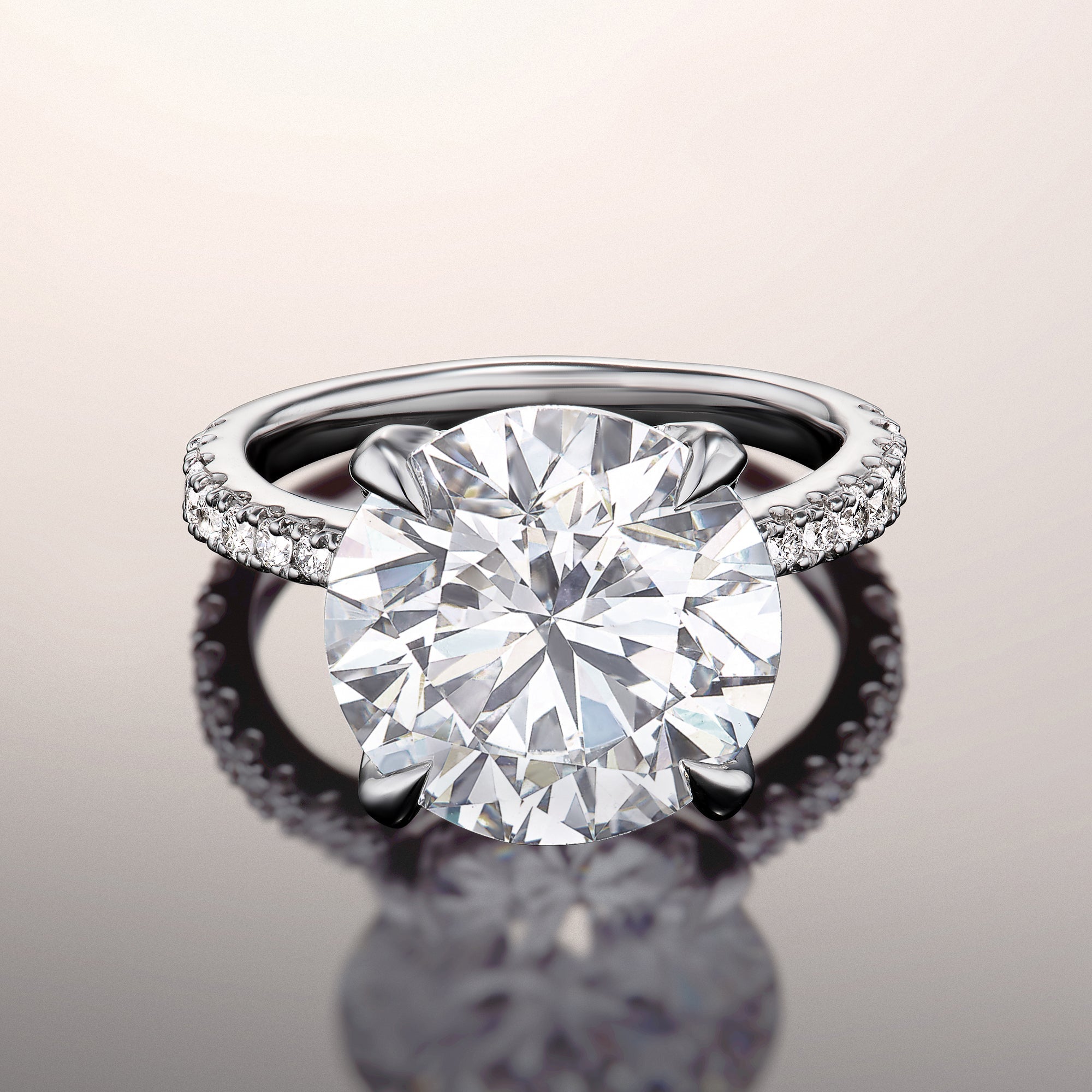
The Cassatt Ring (lab-grown diamond setting)
With Clarity · $2,205
Buyers who want to remove mined-diamond sourcing questions altogether by choosing lab-grown
What We Like
- Lab-grown diamonds sidestep rough-diamond mining and Kimberley Process scope questions entirely since they are grown, not mined
- With Clarity markets lab diamonds as 'identical on the molecular level to natural diamonds'
Could Be Better
- Lab-grown avoids mined-conflict-diamond risk but is a separate ethical question from natural-diamond sourcing (energy use in growing the diamond, for instance) that this listing does not address
Key Specs
A lab-grown setting that sidesteps the Kimberley Process question by design, at a lower price than an equivalent natural setting.
See price at With Clarity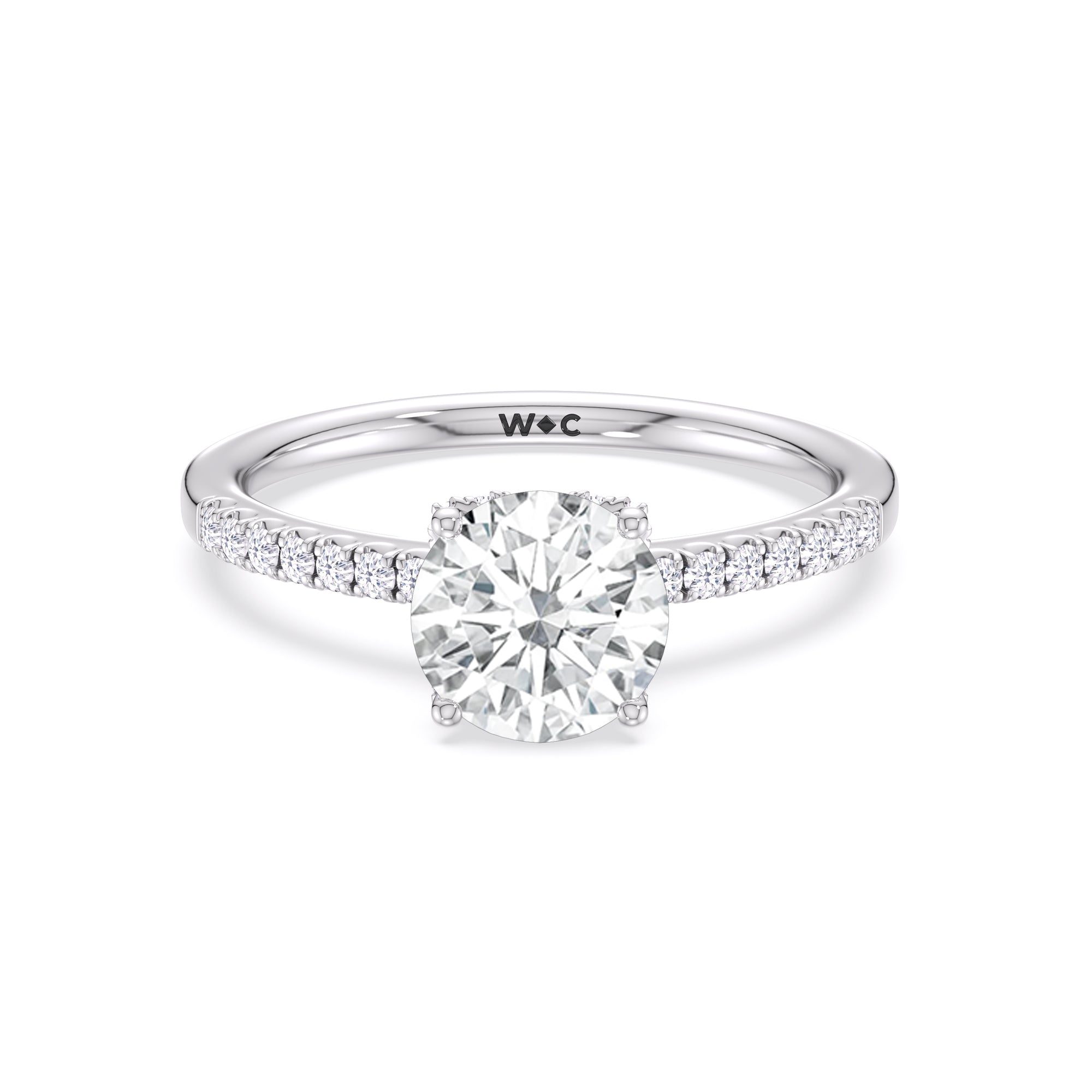
GIA 1.01 Carat I-SI1 Excellent Cut Round Natural Diamond
Blue Nile · $1,953
Budget-conscious buyers for whom Kimberley Process compliance is a sufficient sourcing standard
What We Like
- GIA-certified natural diamond at the lowest price point in this pack
- Blue Nile states its diamonds are sourced in compliance with the Kimberley Process
Could Be Better
- Kimberley Process compliance is a floor, not a guarantee: it only covers rough diamonds and defines conflict diamonds narrowly as those funding rebel movements against legitimate governments (per kimberleyprocess.com)
Key Specs
A GIA-certified natural diamond meeting the industry-standard Kimberley Process floor, with no sourcing claims beyond that stated on the listing.
See price at Blue NileProduct Comparison
| Product | Price | Rating | Reviews | Best For | Buy |
|---|---|---|---|---|---|
| 1.50 ct. Oval Natural Diamond, G Color, VS1 Clarity, Super Ideal Cut Brilliant Earth | $8,340 | 4.5 | — | Buyers who want a large natural stone from a retailer that publishes a sourcing policy beyond bare Kimberley Process compliance | Brilliant Earth |
| 1.00 ct. Round Natural Diamond, F Color, VS2 Clarity, Super Ideal Cut Brilliant Earth | $3,090 | 4.5 | — | Buyers who want at least a stated country of origin on the listing itself, not just a general sourcing policy | Brilliant Earth |
| The Cassatt Ring (lab-grown diamond setting) With Clarity | $2,205 | 4.5 | — | Buyers who want to remove mined-diamond sourcing questions altogether by choosing lab-grown | With Clarity |
| Arc Hidden Halo Engagement Ring With Clarity | $990 | 4.5 | — | Budget buyers who want the sourcing choice (natural vs. lab-grown) left up to them at checkout | With Clarity |
| GIA 1.01 Carat I-SI1 Excellent Cut Round Natural Diamond Blue Nile | $1,953 | 4.5 | — | Budget-conscious buyers for whom Kimberley Process compliance is a sufficient sourcing standard | Blue Nile |
Get price-drop alerts and new guides from Carat Candor
One email a week: price drops on the gear we recommend, new guides, and what changed. No spam, unsubscribe anytime.